Parker Lang · 19 September 2026
Examining the Effects of Keel Aspect Ratios on Maneuverability in Inland Waterway Vessels
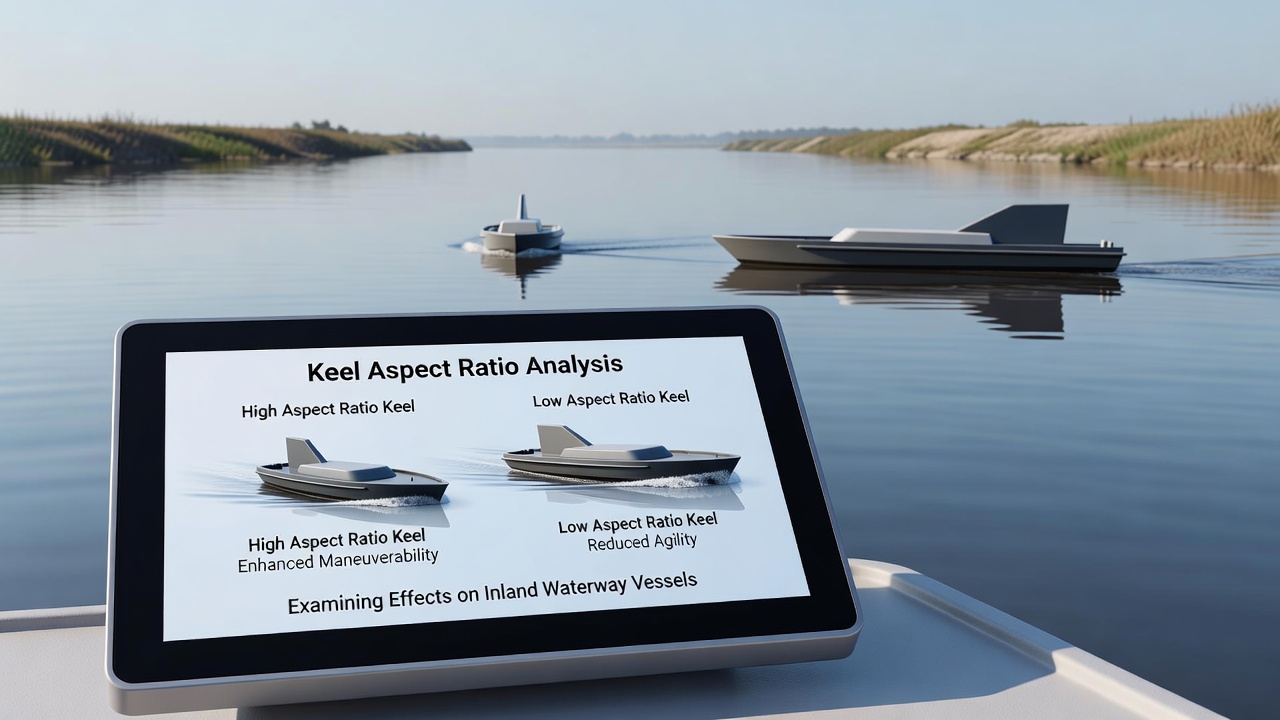
Keel aspect ratio refers to the relationship between the vertical span of a keel and its chord length and researchers have measured how this proportion influences hydrodynamic forces during vessel turns and course corrections in restricted channels. Inland waterway vessels operate in environments where water depth often stays below ten meters and channel widths limit evasive space so the lift generated by higher aspect ratio keels tends to reduce leeway while increasing the rate at which a hull can change heading without excessive rudder deflection.
Data collected from scale model tests in towing tanks shows that keels with aspect ratios above six produce greater side force per unit area compared with lower ratios yet they also experience earlier stall when angles of attack exceed twelve degrees in shallow water conditions. Observers note that this trade-off becomes particularly relevant for push barges and self-propelled cargo carriers that routinely navigate lock approaches and river bends where precise control determines transit times and collision avoidance margins.
Hydrodynamic Principles at Work
The effective aspect ratio increases when a keel operates near the bottom because the boundary layer interaction reduces tip vortex formation and studies conducted by naval architecture departments at several European universities confirm that this ground effect can raise lift coefficients by fifteen to twenty percent in depths equal to one and a half times the draft. Lower aspect ratio keels distribute force over a longer chord which delays stall but requires larger rudder angles to achieve the same turning radius and operators on the Mississippi River system have recorded corresponding increases in fuel consumption during repeated course adjustments.
Researchers tracking full-scale vessels equipped with instrumented keels report that aspect ratios between four and five strike a balance for most inland configurations because they maintain directional stability at service speeds of eight to twelve knots while still allowing the hull to respond within the time constraints imposed by narrow fairways. Higher ratios prove advantageous in straight reaches where minimal rudder use preserves energy yet they demand careful design to avoid structural overload when the vessel encounters cross currents at confluences.
Operational Data from Major Waterways
Figures released by the United States Army Corps of Engineers document that vessels fitted with keels of aspect ratio 5.2 completed lock transits on the Ohio River with an average of three fewer course corrections per passage than those using ratios near 3.8 during the 2024 navigation season. Similar patterns appear in data from Transport Canada on the St. Lawrence Seaway where seasonal current variations amplify the importance of consistent lift characteristics across changing depths.
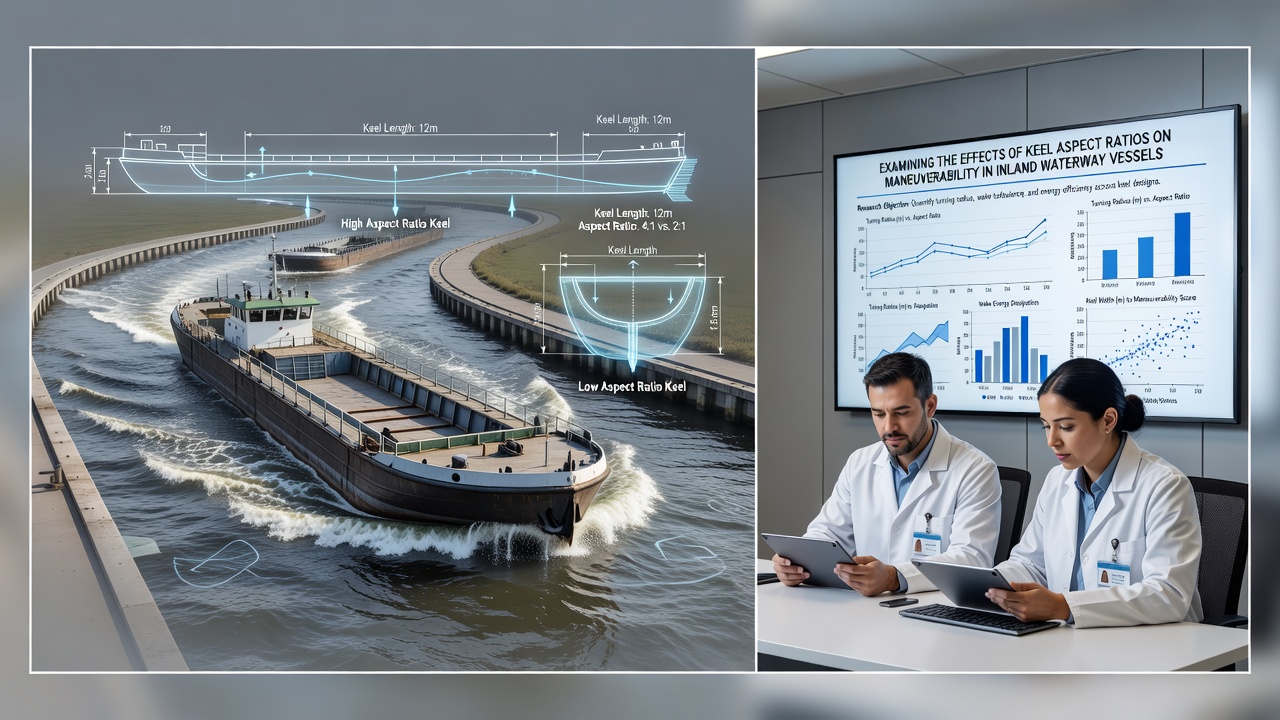
One analysis of accident reports compiled by the European Maritime Safety Agency indicates that vessels with aspect ratios below four accounted for a disproportionate share of grounding incidents in canals during low-water periods because their reduced lift required greater helm input and therefore larger swept paths. The pattern holds across multiple basins and suggests that aspect ratio selection directly affects the safety envelope available to pilots when under-keel clearance drops below twenty percent of draft.
Design Adjustments and Recent Findings
Naval architects adjust aspect ratio in conjunction with keel chord thickness and leading-edge radius to maintain attached flow at the higher angles encountered during tight maneuvers and computational fluid dynamics simulations validated against tank tests show that modest increases in leading-edge radius can extend the useful operating envelope by two degrees before separation occurs. In September 2026 the International Conference on Inland Waterway Hydrodynamics will present updated guidelines that incorporate these findings into recommended ranges for new builds operating on the Danube and Rhine corridors.
Builders have also explored retractable or variable-span keels that allow crews to raise the effective aspect ratio in deeper sections while lowering it for shallow passages although mechanical complexity and maintenance costs limit adoption to specialized survey and emergency response craft. Data from field trials on the Great Lakes connecting channels demonstrate that such systems can reduce turning circle diameters by up to eighteen percent when deployed at optimal heights relative to the local depth.
Conclusion
Aspect ratio selection for inland waterway keels therefore represents a calculated compromise between lift efficiency, stall margin, and structural practicality and continued collection of full-scale performance metrics will refine the ranges used in future vessel specifications. Regulatory bodies and classification societies already reference these parameters when reviewing designs for restricted service notations and the integration of real-time depth and current data into bridge systems promises to further optimize how crews apply the hydrodynamic advantages of each configuration.