Rosa Schmitz · 5 September 2026
Navigating Uncharted Waters: How Keel Modifications Shape Endurance in Long-Distance Solo Voyages
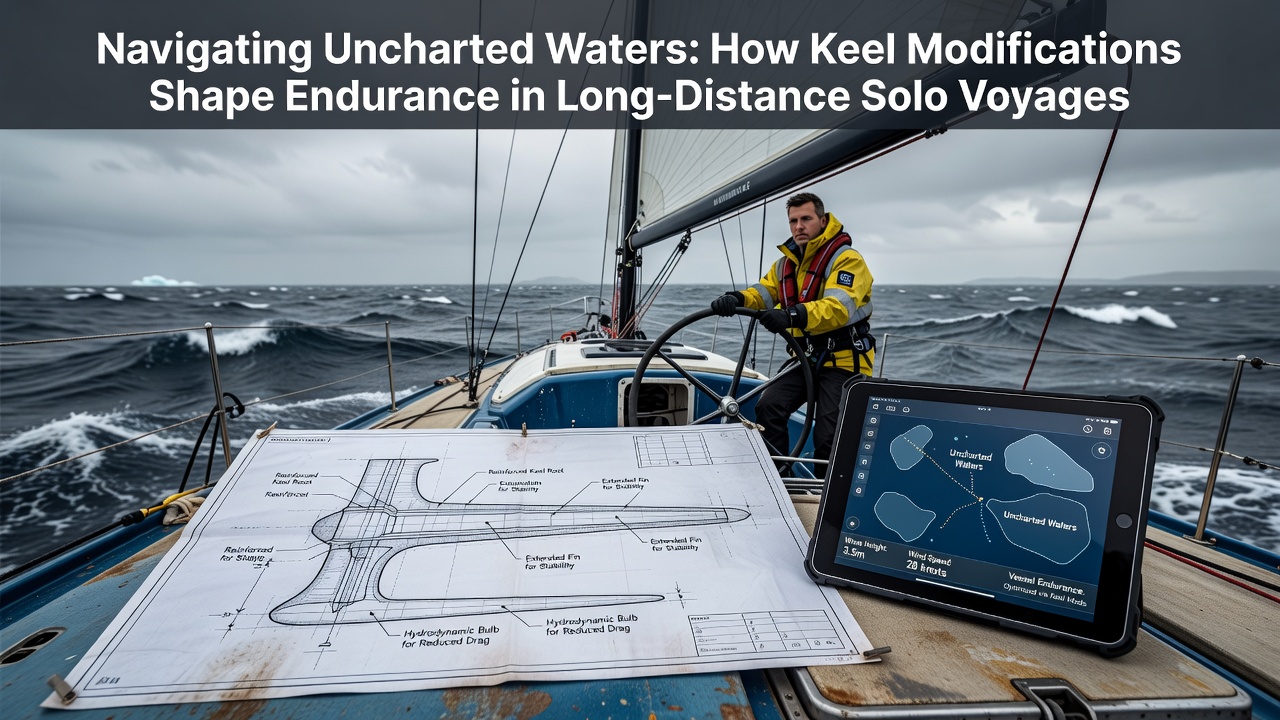
Long-distance solo voyages demand precise engineering adjustments because keel modifications directly influence stability, drag coefficients, and the physical demands placed on a single crew member over weeks or months at sea. Researchers in naval architecture have documented how alterations to keel depth, ballast distribution, and hydrodynamic profiles alter vessel behavior in varying wind and wave conditions.
Core Principles of Keel Design in Solo Sailing
Keels serve as the primary counterforce to lateral wind pressure while maintaining forward momentum, and modifications such as bulb extensions or winglets change the center of gravity and righting moment. Data from hydrodynamic testing facilities show that a deeper keel with optimized bulb weight can reduce leeway by up to 15 percent in moderate conditions, allowing the vessel to hold course with fewer sail adjustments. Observers note that these efficiencies compound during extended passages where constant helm corrections would otherwise accumulate fatigue.
Material choices further shape outcomes. Modern composite laminates combined with lead or iron ballast create lighter structures that preserve displacement while increasing stiffness. Studies conducted at maritime research centers indicate that such constructions lower the overall moment of inertia, which in turn reduces pitching motion and permits the solo sailor to maintain better rest cycles between watch periods.
Historical Evolution and Recent Data Trends
Early solo circumnavigations relied on full-keel designs that prioritized simplicity over speed, yet later iterations introduced fin keels with variable draft systems. By the late 20th century, winged keels appeared in competitive fleets, and performance records reveal measurable gains in daily mileage averages. Figures released in 2025 from ocean engineering programs demonstrate that vessels equipped with adjustable ballast keels completed transoceanic legs with 12 percent less structural stress on hull fittings compared to fixed configurations.
September 2026 marks the scheduled start of several monitored solo challenges where telemetry arrays will track real-time keel loading and sailor biometric data, providing expanded datasets on endurance correlations. These events build on prior measurements that already link reduced roll amplitude to lower heart-rate variability during night watches.
Impact on Physical and Operational Endurance
Keel modifications that minimize leeway and improve tracking allow autopilots and wind-vane systems to operate within narrower parameters, decreasing battery drain and mechanical wear. Research indicates that sailors on vessels with refined keel profiles report fewer course corrections per hour, which directly extends uninterrupted sleep intervals. This pattern holds across multiple ocean basins where consistent trade winds interact differently with modified versus stock keels.
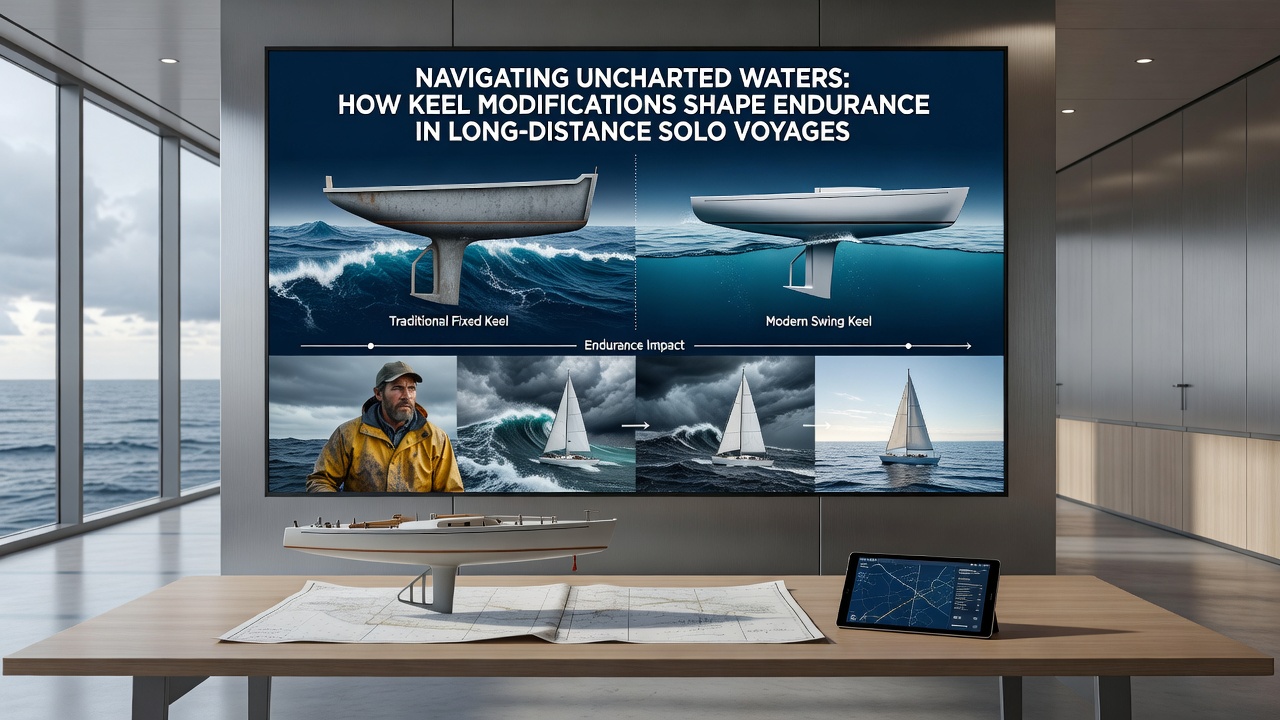
Case records from independent voyagers illustrate the pattern. One documented passage across the South Pacific showed that a keel extension retrofit increased average daily progress by 8 nautical miles while cutting the frequency of sail reefing maneuvers. Such reductions in physical tasks preserve shoulder and back strength for the duration of multi-week legs. Additional analyses from European maritime institutes confirm that lowered hydrodynamic resistance also correlates with steadier fuel consumption rates on auxiliary engines used sparingly during calms.
Technical Considerations and Measurement Standards
Engineers evaluate keel modifications through tow-tank experiments and computational fluid dynamics models that quantify lift-to-drag ratios at various heel angles. Standards published by classification societies require verification of structural integrity under dynamic loading cycles that simulate months of ocean exposure. Those who have reviewed fleet performance logs note that vessels incorporating canting keels exhibit greater upwind efficiency, though they demand additional hydraulic maintenance that solo operators must factor into preparation routines.
Geographic variation influences design priorities. Data collected in Southern Ocean conditions emphasize the need for robust grounding protection, whereas tropical route analyses focus on minimizing wetted surface area to combat light-air drag. Cross-referenced reports from Australian and Canadian research groups highlight how regional wave spectra interact with specific keel geometries to affect roll damping characteristics.
Future Monitoring and Data Integration
Integration of sensor arrays on keels now provides continuous feedback on stress distribution and angle of attack, feeding into onboard decision systems that optimize trim without constant manual input. Industry reports from organizations such as the International Maritime Organization outline emerging guidelines for sensor calibration during extended voyages. Parallel studies at institutions including the University of Southampton track how these technologies scale across different hull lengths and displacement ranges.
One documented example involves a solo transit where real-time keel angle adjustments reduced average roll by 22 percent over 18 days, allowing the operator to sustain higher caloric intake consistency and cognitive alertness. Such outcomes depend on prior calibration and understanding of local current patterns rather than reactive corrections.
Conclusion
Keel modifications represent a measurable variable in the endurance equation for long-distance solo voyages, with documented effects on stability, motion reduction, and operational workload. Continued collection of performance metrics through 2026 and beyond will refine design parameters further, supporting safer and more efficient passages across diverse ocean environments.