Lars Lang · 17 October 2026
Symmetry in Hull Contours: How Even Profiles Affect Load Distribution Across Merchant Vessel Fleets
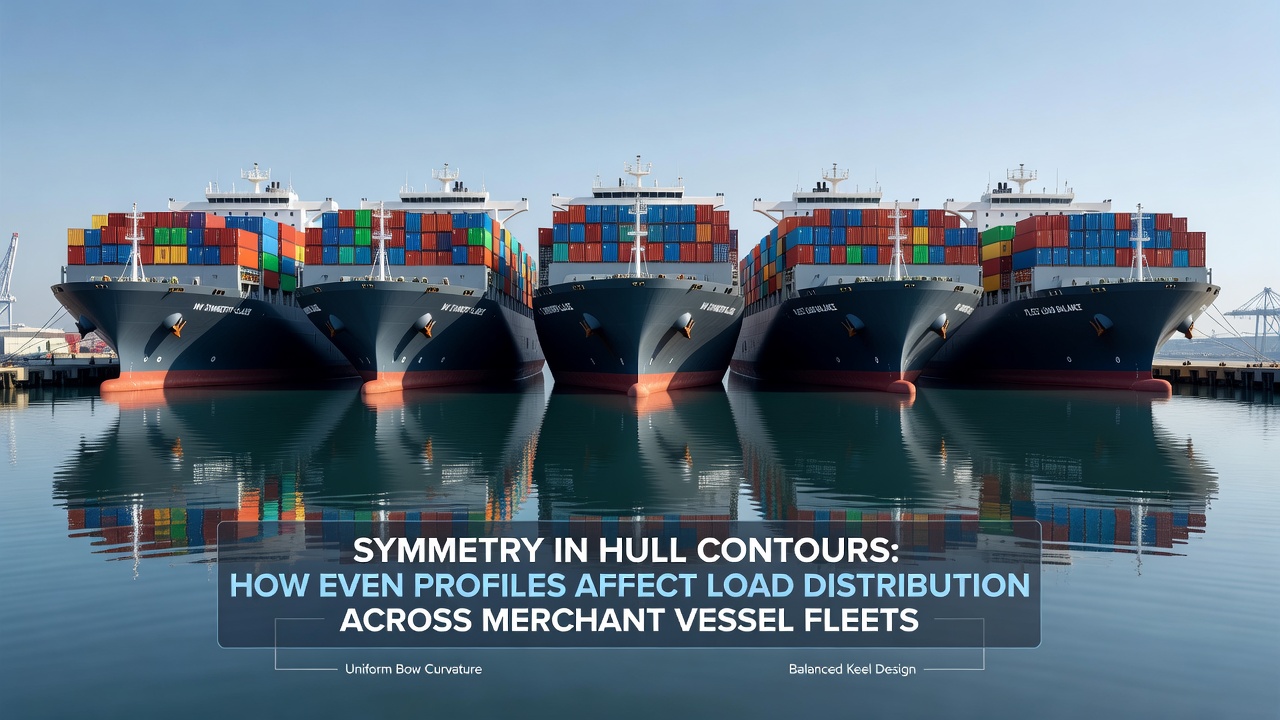
Merchant vessel fleets rely on precise hull symmetry to manage cargo loads across thousands of voyages each year, and researchers at naval architecture institutions continue to track how even contours influence stress points along keels and bilges. Data from fleet monitoring programs shows that balanced profiles reduce uneven weight transfer during loading cycles at major ports, while asymmetric designs often lead to concentrated forces near the midship sections. Observers note that these patterns emerge consistently in container ships and tankers operating on transoceanic routes.
Core Principles of Hull Contour Symmetry
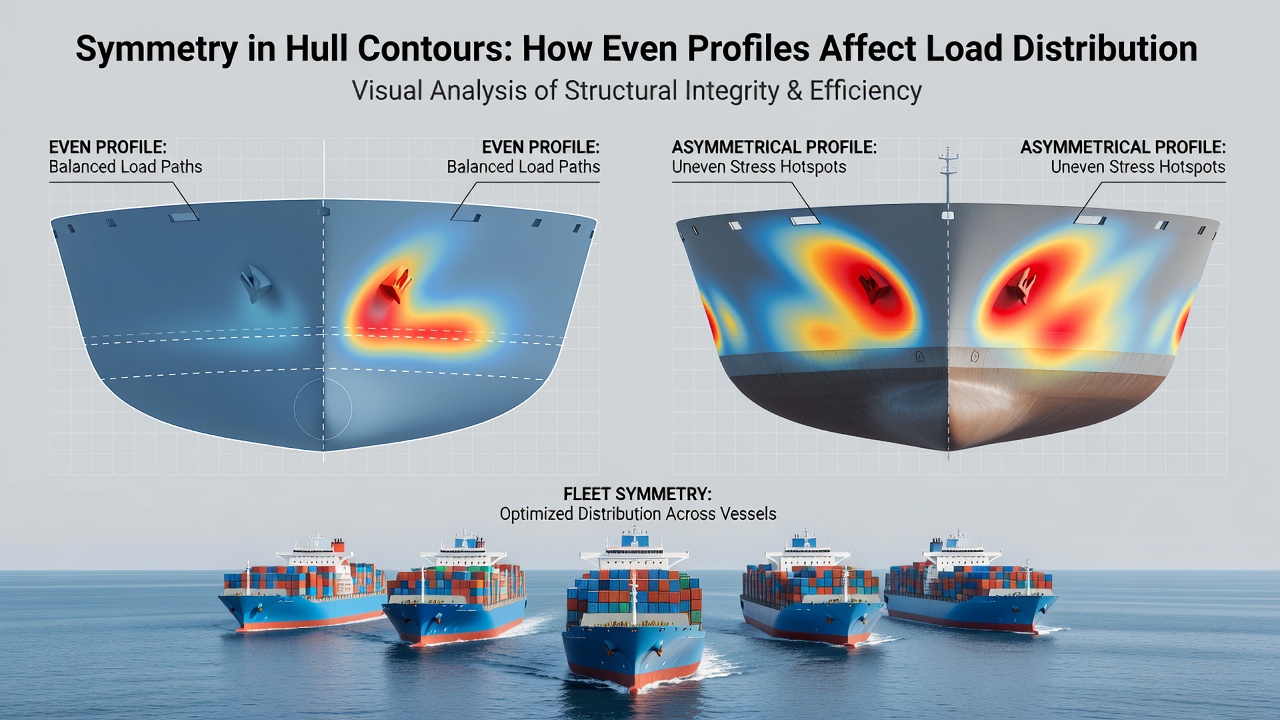
Symmetry in hull design means the port and starboard sides mirror each other along the centerline, which allows weight from containers, bulk cargo, or liquid tanks to spread evenly across the vessel's length and breadth. Engineers calculate these profiles using finite element models that account for draft variations and wave-induced bending moments, and studies from European maritime research centers indicate that deviations as small as two percent in contour alignment can shift load peaks by several meters. Those who've reviewed operational logs from fleets in the Pacific and Atlantic observe that even profiles maintain consistent shear forces during ballast exchanges, whereas uneven sections create localized pressure that accelerates fatigue in plating and frames.
Impact on Load Distribution in Daily Operations
Load distribution starts at the terminal where cranes place cargo according to pre-planned stowage charts, and symmetric hulls let operators fill holds without constant trim adjustments that consume extra fuel. Figures from classification society databases reveal that vessels with matched contours handle full deadweight capacities more reliably across seasonal weather changes, while fleets mixing older asymmetric hulls report higher rates of structural inspections after heavy weather passages. In October 2026, updated guidelines from the International Maritime Organization are scheduled to emphasize symmetry checks during special surveys, which will affect how operators document load paths for bulk carriers and product tankers.
What's interesting is how these contours interact with dynamic forces once the vessel leaves port. Wave patterns and wind angles apply varying pressures along the hull, and even profiles distribute those forces so that no single compartment bears disproportionate stress. Researchers have measured reduced rolling amplitudes in symmetric designs during model tank tests, and this translates directly to steadier cargo stacks that require fewer lashings adjustments mid-voyage. People who've examined maintenance records across multiple shipping companies find that symmetric hulls show slower crack propagation rates near the turn of the bilge compared with vessels that carry slight asymmetries from construction or repairs.
Fleet-Wide Patterns and Measurement Practices
Across global merchant fleets, classification societies track symmetry metrics through ultrasonic thickness readings and laser hull surveys that capture contour deviations at regular intervals. Australian Maritime Safety Authority reports highlight that operators using symmetric designs achieve more predictable cargo intake volumes because trim corrections stay minimal even when loading mixed cargoes like grain and machinery. And here's the thing: fleets that retrofit sections to restore symmetry often see measurable drops in fuel consumption per nautical mile, since the vessel rides with less list and requires smaller rudder corrections to maintain course. Data collected through voyage data recorders confirms these efficiencies hold across both newbuilds and vessels that have undergone major refits.
Take one fleet manager who coordinated a series of sister-ship comparisons in the Indian Ocean trade lane. The vessels with documented contour symmetry maintained even tank pressures during simultaneous ballast and cargo operations, whereas the comparison ship with minor asymmetry needed additional pumping cycles to correct list. Such operational differences accumulate over hundreds of port calls, and industry organizations like the International Chamber of Shipping have compiled statistics showing lower downtime for symmetric hulls during annual dry-docking periods. Those measurements now feed into digital twin simulations that predict load paths years ahead of actual service.
Regulatory Context and Emerging Standards
Current regulations require symmetry verification as part of stability book approvals, and authorities in Canada and the European Union have aligned their inspection protocols to flag any contour variations that exceed defined tolerances. Research papers from naval engineering departments at several universities demonstrate that even small profile differences alter the location of the neutral axis during bending, which changes how longitudinal strength members carry cargo weight. Operators who integrate these findings into fleet planning tools report steadier performance across varying cargo densities, from heavy ores to lighter containers.
Yet the reality is that maintaining symmetry demands attention during both new construction and repair phases. Weld sequences and plate fairing techniques must preserve the original lines, and any deviation gets recorded for future reference. In October 2026, several classification societies plan to release revised software modules that flag symmetry issues earlier in the design review process, giving shipyards clearer parameters before steel cutting begins.
Conclusion
Symmetry in hull contours remains a foundational factor in how merchant vessel fleets manage load distribution, and ongoing data collection continues to quantify its effects on structural longevity and operational efficiency. Classification records and regulatory updates scheduled through 2026 show that balanced profiles support consistent performance across diverse trade routes and cargo types. Those tracking fleet metrics note that attention to even contours during design, construction, and maintenance phases yields measurable advantages in stress management and voyage planning.